




Black Friday is no longer just a single day of discounts. Many ecommerce businesses extend their campaigns across the days leading up to Black Friday, Cyber Monday and the wider holiday shopping period.
For subscription brands, this creates opportunities to attract shoppers who already use products regularly or want a convenient way to replenish essentials.
Consider a Shopify store selling coffee, skincare, pet supplies or wellness products. A shopper might initially purchase one product during a Black Friday sale. If the product fits their needs, a subscription option could make future purchases easier.
This creates two opportunities:
- Acquire new customers: Introduce your products to shoppers actively comparing holiday offers.
- Encourage recurring purchases: Give customers a convenient way to continue receiving products they already value.
- Improve customer experience: Explain delivery frequency, pricing and subscription terms clearly.
- Build a stronger acquisition funnel: Use seasonal traffic to learn which campaigns attract valuable customers.
The objective is not simply to generate the highest number of orders during BFCM. It is to attract customers whose needs align with your products and subscription offering.
7 Black Friday Marketing Strategies for Shopify Subscription Brands
1. Start Your BFCM Campaign Planning Early
Waiting until Black Friday week to prepare your marketing campaign can leave little time to test messaging, review product pages and coordinate promotional activities.
Start by establishing your campaign goals and working backward from your launch date.
Your preparation checklist should include:
- Review last year’s Black Friday and Cyber Monday performance, if available.
- Identify products suitable for seasonal promotions.
- Decide which customer segments you want to reach.
- Prepare campaign landing pages, email creative and social media content.
- Review inventory and fulfillment readiness with your operations team.
- Test discount codes, checkout flows and subscription purchasing journeys.
- Set up analytics and campaign tracking before launch.
Black Friday falls on November 27 in 2026, followed by Cyber Monday on November 30. Use the weeks before these dates to build awareness, collect email signups and prepare your promotional assets.
Pro tip: Create a Black Friday Marketing Strategies campaign calendar with clear deadlines for content, email campaigns, landing page updates and performance reviews. This helps your team coordinate activity without rushing important changes at the last minute.
2. Create Subscription Offers That Protect Profit Margins
Discounts can attract attention, but a larger discount does not automatically produce a more profitable campaign.
Subscription brands should evaluate their offers against product costs, fulfillment expenses, customer acquisition costs and expected repeat purchases.
Instead of automatically applying the biggest possible discount, consider which incentive makes sense for your products and customers.
| Promotional idea | How it works | Best suited for |
| First-order discount | Gives eligible new customers an incentive to try a product | Customer acquisition |
| Subscribe-and-save offer | Offers a saving for choosing recurring deliveries | Products customers replenish regularly |
| Subscription bundle | Combines complementary products in one subscription offer | Stores selling related products |
| Multi-period offer | Provides an incentive for a longer commitment, where supported | Products with predictable ongoing demand |
| Loyalty incentive | Rewards eligible returning customers | Stores focused on repeat purchases |
Before launching an offer, calculate the contribution margin after discounts and variable costs. Check the terms of any subscription promotion carefully, including the price customers pay after the introductory period.
Your campaign should communicate the value of the offer without creating unrealistic expectations about future savings.
3. Optimize Product Pages for Subscription Conversions
Driving visitors to your Shopify store is only part of the challenge. Your product pages must help shoppers understand what they are buying and whether a subscription is right for them.
A well-optimized product page should answer the customer’s most important questions before checkout.
Consider these improvements:
- Make the value proposition clear: Explain what the product does and who it is for.
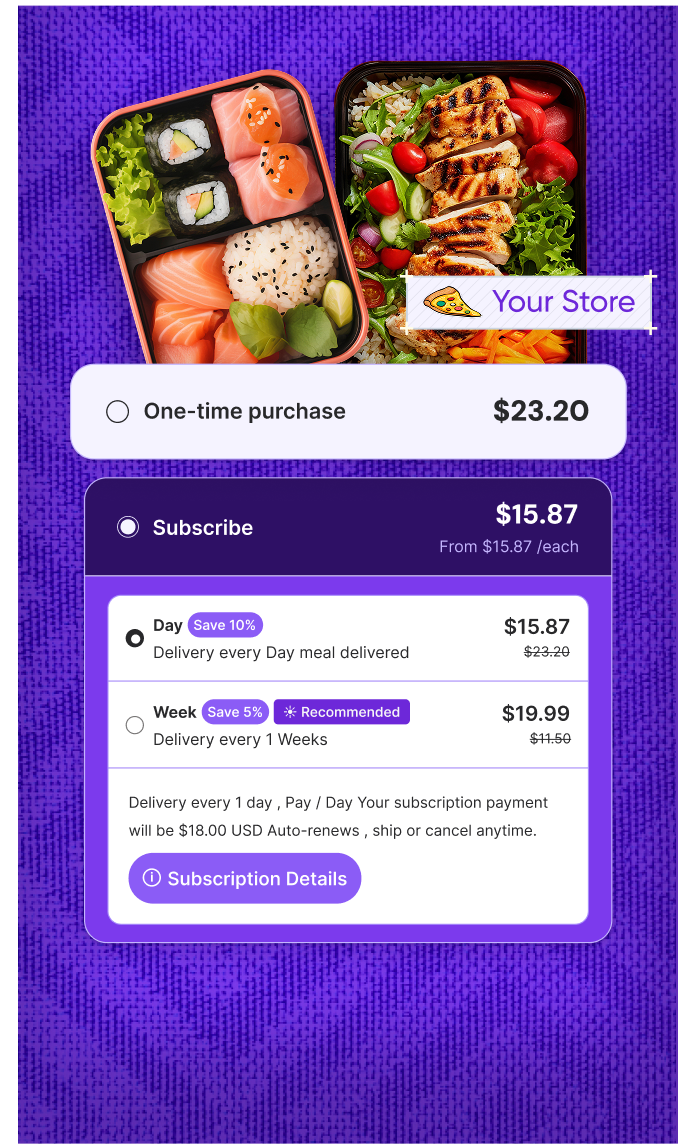
- Present purchase options clearly: Where supported, distinguish one-time purchases from recurring subscription options.
- Explain delivery frequency: Help customers understand when their next order will arrive.
- Display pricing transparently: Clearly communicate introductory discounts, recurring charges and applicable terms.
- Use high-quality product images: Show the product, packaging and relevant use cases.
- Answer common questions: Address delivery, cancellations, product suitability and subscription management.
For example, a skincare store could explain how frequently customers typically use a product and offer an appropriate recurring delivery option where the product and subscription model support it.
Avoid making subscription options confusing or hiding important terms behind promotional messaging. Clear information helps shoppers make informed purchasing decisions.
4. Build a Black Friday Email Marketing Strategy
Email marketing helps subscription brands communicate directly with interested shoppers before, during and after BFCM.
Rather than sending the same message to every subscriber, segment your audience according to relevant behavior and purchase history.
A practical email campaign could include the following messages:
| Timing | Email campaign | Main objective |
| Before Black Friday | Early-access announcement | Build anticipation |
| A few days before launch | Offer preview | Explain the promotion |
| Black Friday | Campaign launch | Drive qualified traffic |
| During the weekend | Product highlights or reminders | Help shoppers discover relevant offers |
| Cyber Monday | Final-day reminder, if the offer genuinely ends | Encourage timely decisions |
| After the campaign | Thank-you and onboarding email | Set expectations for the customer journey |
For existing subscribers, consider whether a message about relevant product updates or subscription benefits would be more useful than another acquisition discount.
For prospective customers, focus on product value, the offer’s terms and a clear call to action.
Important: Send marketing emails only in accordance with applicable consent, unsubscribe and privacy requirements. Avoid misleading subject lines or false scarcity.
5. Use Social Media to Build Awareness Before BFCM
Social media can help Shopify subscription brands introduce products, demonstrate value and remind shoppers about upcoming promotions.
Instead of publishing only discount graphics, create content that helps potential customers understand why they might want the product.
Useful content formats include:
- Product demonstration videos: Show how the product works in everyday situations.
- Short educational videos: Explain the problem the product addresses.
- Customer testimonials: Share genuine feedback with appropriate permission.
- Offer explainers: Show the savings and terms clearly.
- Behind-the-scenes content: Demonstrate how products are prepared, packaged or used.
- Countdown posts: Remind followers about a real campaign launch or deadline.
For a subscription coffee brand, a short video could demonstrate a morning coffee routine and explain how scheduled replenishment makes restocking more convenient.
For a pet supply store, content might demonstrate how recurring deliveries help customers plan for regularly used essentials.
Adapt your messaging to the platforms where your audience is active. Use consistent campaign details across Instagram, Facebook, email and your Shopify store so customers do not encounter conflicting offers.
6. Personalize Campaigns for Different Customer Segments
Not every shopper has the same motivation for buying during Black Friday. A first-time visitor may need product education, while an existing customer may be more interested in a relevant offer or a convenient reorder.
Segmenting your campaigns can make your messaging more relevant.
Consider these audience groups:
New visitors
Introduce your brand, explain the product’s benefits and make the next step clear.
Existing one-time buyers
Where relevant, explain how a subscription could simplify future purchases. Do not assume every product is suitable for recurring delivery.
Current subscribers
Communicate relevant product information, service updates or benefits that apply to their existing subscription. Avoid sending acquisition offers that create unnecessary confusion.
Engaged but undecided shoppers
Use appropriate reminders and product education to address common questions, subject to your consent and tracking practices.
Personalization does not always require complicated technology. Even basic segmentation based on purchase history, product interest or email engagement can help make a campaign more useful.
7. Prepare a Post-BFCM Campaign Before the Sale Begins
One of the most overlooked Black Friday marketing strategies is planning what happens after the promotion ends.
A shopper who purchases during BFCM should receive a clear, consistent experience after checkout. This is particularly important when the order starts a recurring subscription.
Plan your post-purchase communication before the campaign launches.
Your post-BFCM plan can include:
- An order confirmation explaining what the customer purchased.
- Subscription details, including renewal timing and applicable charges.
- Product usage or onboarding guidance.
- Relevant support information and subscription management instructions.
- Appropriate reminders when a repeat purchase is likely to be useful.
- Customer feedback requests at a suitable point in the journey.
Measure the performance of these activities over time. Immediate order volume does not tell you whether customers will return or whether the campaign was profitable.
A strong post-purchase experience helps customers understand the value of their purchase and makes it easier to continue using a product that meets their needs.
How Easy Subscriptions App Can Support Your BFCM Strategy
For Shopify merchants planning Black Friday promotions, a subscription app can help make recurring purchasing part of the shopping experience.
Easy Subscriptions App is designed to help Shopify merchants offer subscription purchasing and build recurring revenue opportunities.
Depending on your store’s setup and the features available in your subscription configuration, you can use a subscription experience to support strategies such as:
- Offering recurring purchase options for products customers regularly use.
- Communicating subscription value alongside seasonal promotions.
- Making subscription purchasing available directly through relevant product pages.
- Helping customers understand recurring purchases as part of their buying decision.
Before your BFCM campaign goes live, verify that your subscription settings, discounts, checkout experience and customer-facing terms work as intended.
Do not assume that every promotional code or Shopify discount automatically applies to every subscription order. Test the exact configuration you plan to use.
If your store already uses Easy Subscriptions App, review your current subscription journey before adding new campaign elements. If you are evaluating subscription functionality for your store, explore Easy Subscriptions App to understand whether its available features fit your requirements.
The goal is to make recurring purchasing a natural option for customers who genuinely benefit from it, rather than treating every Black Friday buyer as a potential subscriber.
A Practical BFCM Marketing Plan for 2026
Use this checklist to organize your campaign from preparation through performance review.
| Timeline | Priority tasks |
| 4–6 weeks before BFCM | Set goals, analyze previous campaigns, choose offers and prepare campaign messaging |
| 2–3 weeks before BFCM | Update product pages, prepare email sequences and create social content |
| 1 week before BFCM | Test checkout, discounts, subscription flows, tracking and campaign links |
| Black Friday weekend | Monitor sales, campaign performance, customer questions and technical issues |
| Cyber Monday | Review results and communicate any genuine final-day offers |
| 1–2 weeks after BFCM | Analyze acquisition costs, order value, conversion rates and customer feedback |
| Following months | Evaluate repeat purchases, subscription activity and longer-term customer value |
Use these timelines as a planning framework rather than a rigid schedule. Adjust them to your team’s capacity, product category and promotional complexity.
Metrics to Track During Your Black Friday Campaign
Your marketing dashboard should measure more than revenue and website traffic.
| Metric | What it helps you understand |
| Conversion rate | How effectively visitors become customers |
| Average order value | How much customers spend per order on average |
| Customer acquisition cost | How much you spend to acquire a customer |
| Email click-through and conversion rates | Whether email campaigns generate meaningful action |
| Subscription signups | How many customers begin a subscription |
| Subscription activation | Whether new subscribers successfully enter the intended subscription journey |
| Repeat purchase rate | How many customers return to buy again |
| Contribution margin | Whether sales remain financially worthwhile after relevant variable costs |
Compare these metrics with your own historical performance and business goals. Where possible, separate subscription orders from one-time purchases so you can understand which parts of the campaign contribute to recurring revenue.
Avoid judging campaign success solely by the number of orders generated during Black Friday weekend. Longer-term results can take weeks or months to become clear.
Common Black Friday Marketing Mistakes to Avoid
Even well-planned campaigns can underperform when basic details are overlooked.
Offering discounts without checking profitability: Calculate the financial impact of the promotion before launch.
Using the same message for every customer: Tailor your communication to the customer’s relationship with your store.
Ignoring mobile shopping: Check that product pages, subscription selections and checkout work properly on mobile devices.
Making subscription terms unclear: Explain recurring charges, delivery frequency and relevant cancellation or management terms.
Launching without testing: Test campaign links, discount eligibility, checkout and subscription settings before sending traffic.
Ignoring post-campaign results: Evaluate customer acquisition costs, repeat purchases and subscription performance instead of focusing only on immediate sales.
Creating artificial urgency: Use genuine deadlines and stock limitations only when they accurately reflect the offer.
Final Thoughts
The most effective Black Friday marketing strategies for Shopify subscription brands go beyond attracting shoppers with seasonal discounts. They combine campaign planning, relevant offers, product page optimization, email marketing, social media and a thoughtful customer experience.
For subscription businesses, the opportunity is to attract customers who value the product and make recurring purchases convenient when appropriate. That requires transparent subscription terms, reliable store functionality and a clear plan for evaluating results after Cyber Monday.
Start preparing your BFCM campaign early, test every important part of the purchase journey and measure both immediate performance and longer-term customer behavior.
With a well-organized campaign and the right subscription experience, Shopify merchants can use Black Friday 2026 as an opportunity to attract relevant customers and build a stronger foundation for recurring revenue.




 Subscription Audit